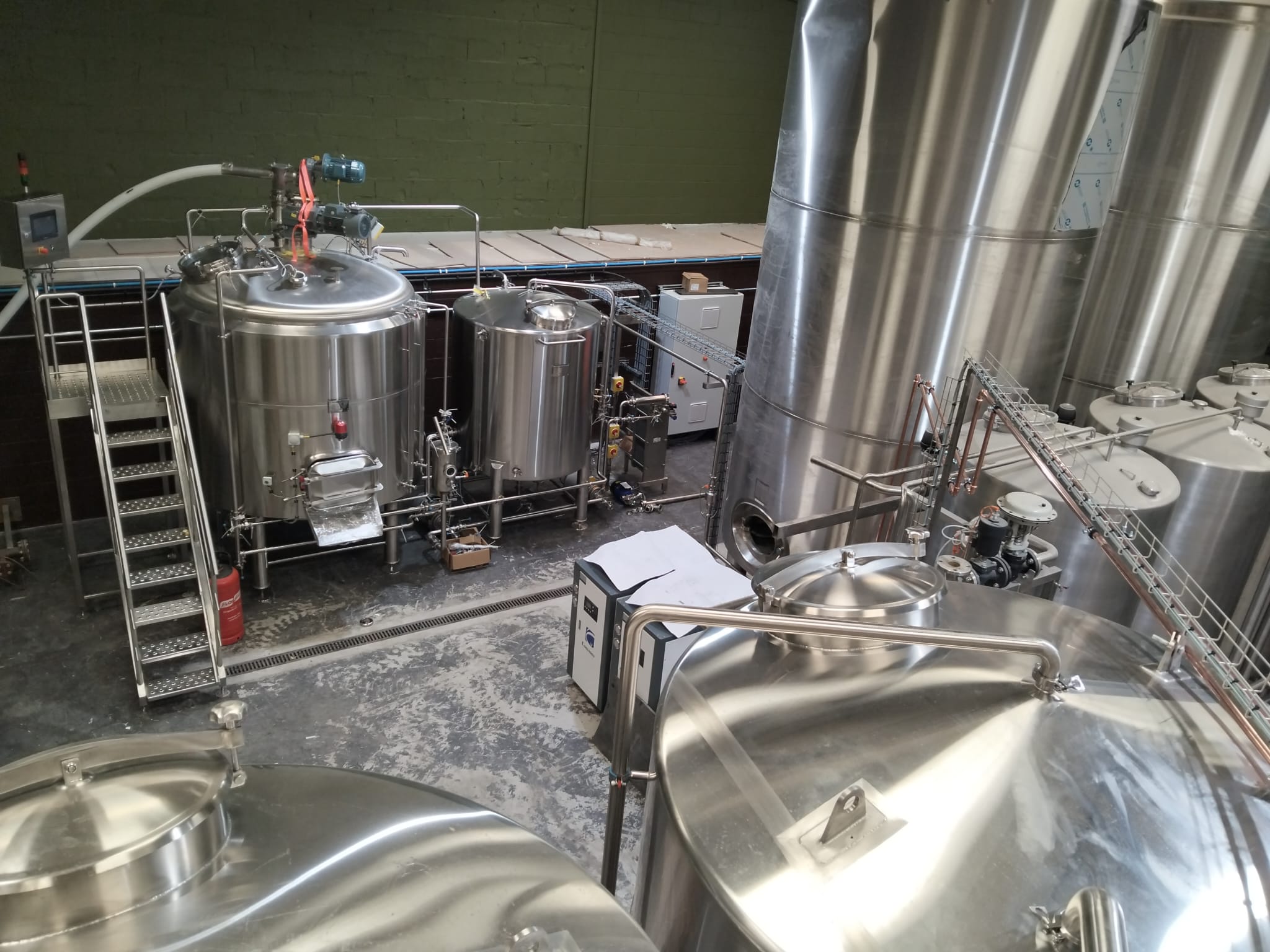
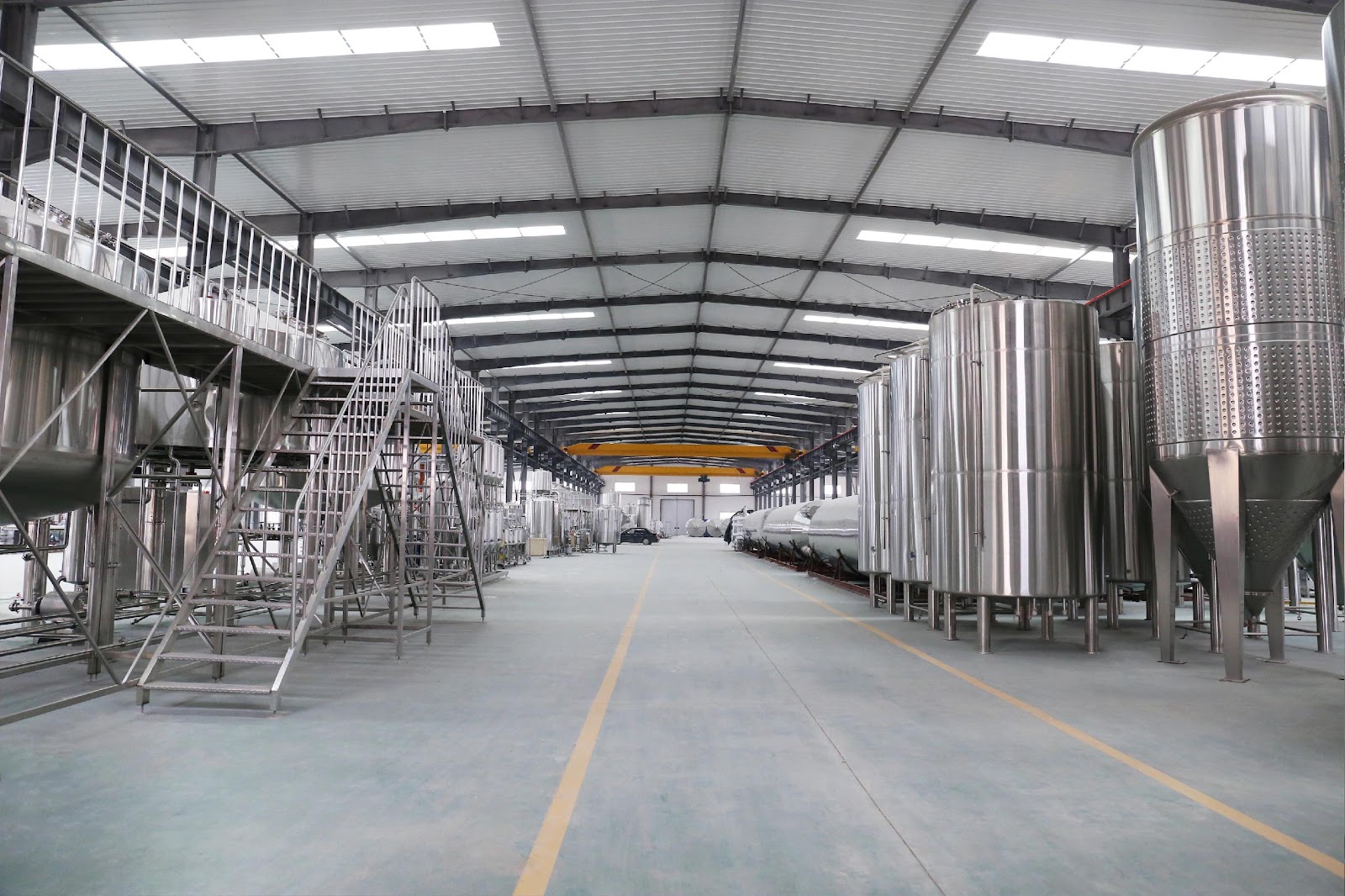
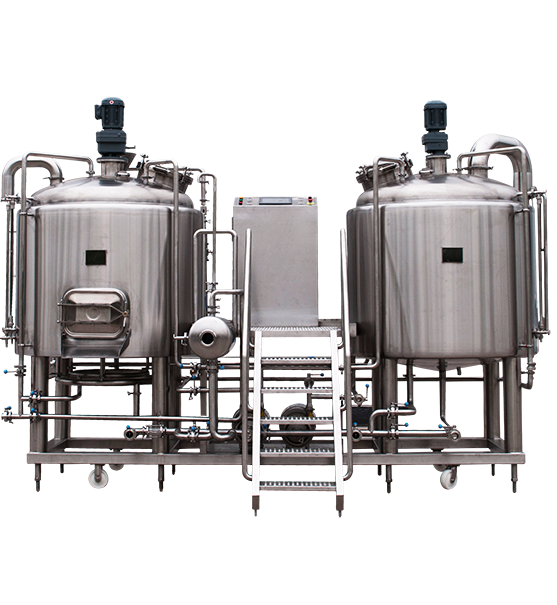
In beer brewing, distilling, and kombucha production, equipment upgrades are rarely driven by curiosity. More often, they are triggered by pressure building inside the production schedule.
Industrial fermentation tanks start staying full longer than expected. Batch turnover slows. Cleaning begins to take over more of the working week. In breweries, this often happens as seasonal demand increases or core product ranges expand. In distilling, longer maturation or conditioning stages can occupy vessels for extended periods. In kombucha production, multi-stage fermentation can stretch tank usage far beyond initial expectations.
At a certain point, what initially looks like a capacity issue becomes a full production bottleneck.
This is usually when businesses start looking at new industrial fermentation tanks, often after the real constraint has already formed.
At V-Brew, these conversations rarely begin with equipment specifications. They start with production flow, scheduling pressure, and where time is being lost inside the process.
Because in practice, tank size is rarely the only issue.
The Real Issue Is Rarely Just Volume
When producers begin planning expansion, the most common assumption is that more volume will solve the problem. Increase tank size or add additional vessels and output will scale accordingly.
In reality, brewing, distilling, wine and kombucha production rarely behave in such a simple way.
A brewery might be limited by fermentation turnaround rather than brewhouse capacity. A distillery may have enough production capability but insufficient vessel availability during key stages. A kombucha producer may be constrained by staggered fermentation phases that keep tanks occupied longer than expected.
This means production capacity is not only about how much can be made. It is about how often equipment is available to be used again.
That distinction is where most scaling issues begin.
How Production Style Changes Capacity Needs
Two producers can achieve the same annual output but require completely different fermentation setups.
Beer production typically follows shorter and more predictable fermentation cycles, which allows faster vessel rotation. Distilling often involves longer timelines, particularly where maturation or conditioning stages are involved. Kombucha production is frequently continuous and layered, with overlapping fermentation stages that reduce flexibility.
Because of this, capacity planning cannot rely on volume alone.
It must also account for how long product occupies a tank, how predictable those cycles are, and how much overlap occurs between batches.
Once fermentation time is considered properly, many producers realise that the limiting factor is not production output but vessel availability.
Why One Large Tank Is Not Always the Answer
Upsizing equipment is often seen as the simplest solution when capacity feels constrained. A larger vessel appears to solve multiple problems at once by increasing available volume and reducing the number of individual tanks required.
In some cases, this works well. Larger tanks can reduce handling, simplify cleaning routines, and improve efficiency for single product operations.
However, across brewing, distilling, and kombucha production, this approach can also introduce new limitations.
A brewery with multiple beers in rotation often benefits more from scheduling flexibility than from a single large vessel. A distillery managing different spirit stages requires separation and control rather than consolidation. A kombucha producer working with continuous fermentation often depends on staggered capacity rather than bulk storage.
In these environments, multiple medium sized stainless steel fermentation vessels can offer far more operational flexibility than one oversized tank.
If a single vessel becomes full, production pauses. If it is taken offline, the entire system is affected.
That risk becomes more significant as production complexity increases.
The Hidden Constraint Is Time, Not Space
Most production limitations are not caused by a lack of physical capacity but by how long existing capacity is occupied.
Fermentation time is the key variable that often gets underestimated.
Beer may cycle relatively quickly depending on style. Distilling involves longer timelines depending on process stage and storage requirements. Kombucha often includes multiple fermentation phases that extend total vessel occupancy well beyond the active fermentation period.
When these timelines overlap, scheduling becomes the primary constraint.
At that point, increasing upstream production capacity does not help if downstream fermentation space is already occupied.
This is where many producers first experience structural limitations. Output potential exists, but there is no available space to process it.
Equipment Quality Becomes More Important Over Time
Early purchasing decisions often focus heavily on size and cost. Construction quality tends to receive less attention during the initial planning stage.
Over time, however, build quality becomes increasingly important.
In brewing and kombucha production, internal surface finish and hygienic design have a direct impact on cleaning efficiency and consistency. In distilling, long term durability and vessel integrity become more critical as processes extend over time. Small design choices that seem minor during purchase can have a significant operational impact later.
V-Brew supplies stainless steel fermentation systems designed for beer, distilling, and kombucha production, where hygiene, durability, and consistent performance are essential.
Cooling Capacity Is Often the First Hidden Bottleneck
Temperature control is frequently underestimated during system design.
As production scales, cooling demand increases across multiple vessels operating simultaneously. This creates pressure on systems that may have been sized for lower output levels.
In brewing and kombucha production, temperature stability directly affects product consistency. In distilling, cooling capacity can influence process control and efficiency.
Many producers only identify this limitation after expanding fermentation capacity, when cooling infrastructure is no longer sufficient to support the full system.
V-Brew provides industrial chiller systems designed to scale alongside fermentation equipment, helping maintain balance across production growth.
Cleaning and Workflow Start Defining Capacity
As production increases, cleaning becomes a central part of operational scheduling.
Each additional fermentation vessel introduces more cleaning cycles and more downtime. In breweries managing multiple recipes, distilleries working with varied spirit production stages, and kombucha producers running continuous fermentation, cleaning begins to compete directly with production time.
At scale, capacity is not just about how much can be produced but how efficiently equipment can be turned around between batches.
This is often where producers begin to consider automation, process integration, and supporting equipment alongside fermentation expansion.
Planning Beyond Immediate Demand
The easiest equipment decision is based on current limitations. The more effective decision is based on future constraints.
In brewing, this may involve seasonal growth or product diversification. In distilling, it may involve longer ageing cycles or expanded production stages. In kombucha production, it often involves continuous scaling rather than simple batch expansion.
Fermentation systems are long term infrastructure. Once installed, they define production structure for years.
Final Thoughts
Industrial fermentation tanks are not simply stainless steel containers measured in litres. In beer brewing, distilling, and kombucha production, they sit at the centre of production flow, timing, and scalability.
The challenge is rarely choosing a larger tank. It is designing a system where capacity, timing, and flexibility work together without creating hidden constraints.
V-Brew focuses on fermentation systems that reflect real production behaviour, helping producers scale without losing operational control.